
The aim is to develop the Turku Science Park area into a stage for the circular economy in all its forms. Business Turku and the Science Park’s Circular Economy Forum bring together people and bodies that will make the circular economy a reality.
For instance, in the area of construction Turku region offers straw and reed as raw materials for future houses.
Something new and inspiring is starting to smoulder the Kupittaa and Itäharju districts of Turku. The area around Kupittaa station is already known as Turku Science Park, which extends from the university campus to the Kupittaa workplace hub and the Itäharju area expanding from there.
In the future, Science Park will evolve into an increasingly extensive, innovative area based on sustainable growth. The development of the Science Park is based on solid cooperation and an ecosystem that includes hundreds of companies. At the same time, it forms a close network with higher education institutions.
The aim is for the Science Park to act as an example, where companies, higher education institutions, and the city will develop circular economy solutions for urban construction and housing together – first on a small scale, then on an increasingly larger scale. Turku has established the Science Park Circular Economy Forum, which brings together companies and other enthusiastic actors, too accelerate the circular economy and its different manifestations.
There are already four higher education institutions at which approximately 40,000 students study in the Science Park area. There are approximately 11,000 residents and 26,000 jobs in the area. In Turku’s vision for the future, the Science Park will expand to Itäharju, with an estimated 16,000 more residents, and nearly 20,000 more jobs. They will all play a role as developers and users of circular economy solutions.
– This area has all the potential to utilise expertise and innovative thinking. My main job is to get the right people to talk to one another, summarises Nea Metsänranta, Project Manager of the Circular Science Park project.
A straw house that even the bad wolf cannot blow down
The City of Turku has identified five priorities for its circular economy roadmap: energy, food, mobility, water, and construction. The Science Park's own circular economy roadmap also relies on these. The Science Park serves as a guiding star for concrete circular economy solutions and new operating methods in construction, housing, and communality.
Business Turku has been heading various sustainable construction networks since 2018. As a port city, Turku has sought and developed circular economy solutions for, such things as the relocation and solidification of dredged masses from shipping lanes on land. Masses cannot be deposited in water, so the city is now using these in infrastructure construction in Lauttaranta, which is being built opposite the harbour.
One interesting bio-based building material that supports the circular economy is straw. Unlike the famous fairy tale, straw can be used to build buildings that are sustainable in many ways in an environmentally friendly manner and utilising the circular economy. There is no need to fear wolves or other huffs and puffs in these straw houses.
The Turku BioDemo project studied and tested the use of straw in construction. As a result, Pure Home Nordic, a company specialising in straw construction, was established in the Turku region. The company builds houses from straw element, a breathable, energy efficient, and ecological construction material.
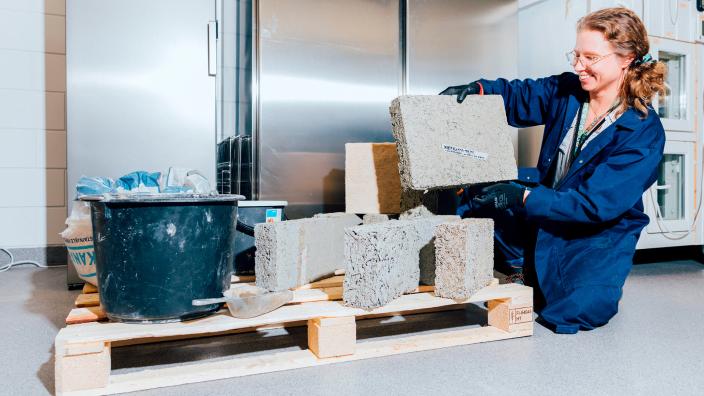
The company already has its own model houses, and it also delivers wall elements on request. A 250-square-metre hall is about to be completed in Paimio for the building business. Jari Petäjämäki, who is one of the company’s two owners, has built his own family’s straw single-family home in Lieto, close to Turku.
At the moment, there are around forty straw houses in Finland, all of which are single-family homes.
– The aim is to also build public buildings from straw in the future, and preliminary discussions on these have already been held in the Turku region, says Reeta Huhtinen, Circular and Bioeconomy Network Manager at Business Turku.
Side streams to create a new flux for construction
The Turku Sustainable Construction Network sees enormous potential in straw construction, as there are huge quantities of this circular economy-compliant material available globally and it is hardly utilised at all as of yet.
Pure Home Nordic currently procures its straw from Slovakia and Lithuania. Although straw construction is only just beginning in Finland, examples of this can be found elsewhere in Europe, such as in Denmark and the Netherlands. In Sweden, a block of flats comprising 12 storeys has been built from straw. In addition to straw, other potential bio-based materials were also studied in the BioDemo project.
– Traditionally, a great deal of wood has been used in Finland, but nowadays forests are seen more as carbon sinks. These new bio-based raw materials are often side-streams of such sectors as the food industry or agriculture, as is straw, and the more efficient use of side streams, is only sensible, Huhtinen points out.
In addition to straw, another possible material that is available closer to home is common reed. The BioDemo project brought together parties whose activities involve common reed, including reed cutters and actors who further process reed. While the network was being built, Business Turku, in cooperation with its network, also examined the development of cutting equipment and the pre-processing and further processing of the material.
The suitability of bio-based materials such as reed and hemp for construction such as their fire resistance were tested in the BioDemo project at the Turku University of Applied Sciences.
Cooperation to provide an advantage for sustainable construction
The construction sector’s sustainability requirements will grow stricter in the future. The objective of the Business Turku and Science Park Circular Economy Forum is to do their part to support the market in responding to future demands with an advantage. Numerous different networks have already developed around sustainable construction in the Turku region, including some thirty companies and a total of around 50 different actors.
– Complying with legislation alone will not make anyone a pioneer, and we want to ensure the field of sustainable construction is even more ready before new requirements come into force, says Nea Metsänranta.
Business Turku also believes that now the opportune time: large operators are already looking into bio-based and circular solutions seriously – including straw and common reed.
The transformation of construction cannot happen instantly, but one step at a time. These steps are taken together in Turku and in the Science Park environment. In addition to new materials, Turku is looking for use and experimentation places for new materials and ways of doing things, such as selective demolition and the reuse of building elements.
– It's not always up to us, which projects gain traction, but we can facilitate the right people meetings one another. Even so, the city has a strong desire to develop the Science Park into a living, sustainable, and evolving platform in which ideas are refined into innovations and then business through bold experimentation and co-development, Metsänranta sums up.
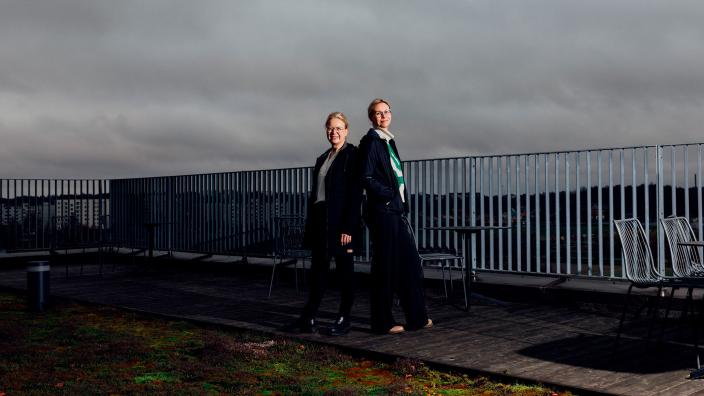
When the Science Park is finally completed in its entirety, the streets will no longer be silent after 5 p.m. Instead, the area will be alive and vibrant regardless of the time and season. The design of the Kupittaa Core, which will extend the Science Park area to Itäharju, focused on mixed urban structure, comfort and semi-public spaces to make the area vibrant. At the same time, the conditions and infrastructure for cooperation and communality will be established. Various functions, housing types and commercial facilities from hotels and offices to versatile business premises will be mixed in the area to form a vibrant environment. Space has also been reserved for parks and other places that enable people to meet up informally.
Turku believes that as cooperation becomes clearer, the Science Park will grow into an urban-scale experimental platform where the circular economy is not a separate project but a way of doing things differently - permanently. And perhaps construction from reed will be seen at some point in the Science Park, Reeta Huhtinen predicts.
– We have an entrepreneur who cuts reed. We have connected him with the current Science Park actors, to determine whether there are opportunities within the Science Park for experimenting with new material solutions.
From collaboration to innovation and sustainability
Turku is a part of the InnoCities network. Industrial renewal and the life science sector are Turku’s development spearheads.
Read more about the BioDemo and Circular Science Park projects:
• BioDemo
• Circular Science Park (In Finnish)