
The global climate is warming rapidly. Without a fast reduction in greenhouse gas emissions, temperatures will rise by an estimated three degrees by the end of the century. The effects of such a high temperature increase would be disastrous for people, nature, and the economy.
The climate will also change in Turku: the growing season will be longer, winters will be milder, and heatwaves will become more common. Turku’s greatest climate risks include sudden high rainfall, storms and floods, high heat, and rapid changes in the sensitive nature of the region. The following table presents the anticipated changes in the climate in Southwest Finland that require adaptation (Report of the Finnish Climate Change Panel 2/2021).
| Season | Temperature | Rainfall | Extreme weather |
| Winter | Rises significantly | Increases | More rainy days, stronger winds and more heavy rainfall |
| Spring | Rises significantly | Increases | Stronger winds and more heavy rainfall |
| Summer | Rises slightly | Stays the same | More heavy rainfall but fewer rainy days |
| Autumn | Rises significantly | Increases | More heavy rainfall |
What does adaptation to climate change mean?
Adaptation prevents or mitigates the negative impacts of climate change and sometimes makes use of the positive ones. Adaptation also means preparing for risks proactively.
Practical examples in Turku include the restoration of wetlands and mires, and the addition of stormwater basins. Due to flood risk, there will be no basement in the Museum of History and the Future that is to be built by the sea and the Aurajoki river.
Adaptation often also improves the pleasantness and safety of the urban environment. For example, urban trees create a nice atmosphere, but they also provide shade from the heat.
Forests and green areas offer opportunities for recreation, sequester carbon from the atmosphere and even out the effects of high rainfall. The strengthening of green belts, protected areas and endangered species’ habitats works the same way on many levels.
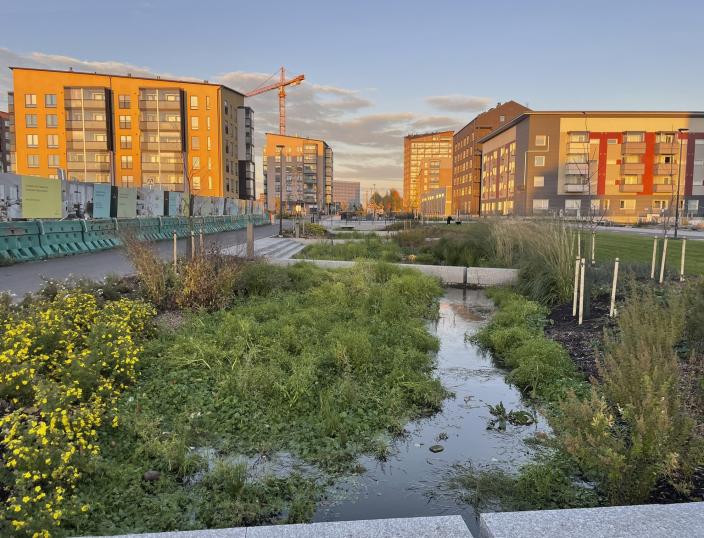
Adaptation is visible in the cityscape
Adapting to climate change and mitigating it go hand in hand. Still, the following methods are particularly characteristic of adaptation.
Investments in critical infrastructure are necessary to keep Turku functional, safe and comfortable in the changing climate. A good example of investments are ones made by Turku Energia in underground cabling, which prevents trees from falling on power lines during storms.
Open ditches, rainwater sewers, stormwater basins and the rest of the stormwater system will be tested to the utmost as rainfall increases. The increase in the volume of rainfall is also a stress on the wastewater discharge system. A discharge pipe project by Turun seudun puhdistamo Oy completed in 2023 improved wastewater treatment capacity. The new discharge pipe enables full use of the treatment plant even during heavy rainfall.
Risk management can mean things like strengthening green networks and using nature-based solutions. The impacts of the changing climate have to be taken into account already in the land-use planning stage.
Communality creates safety in difficult situations caused by extreme weather phenomena. In Turku, communality is strengthened through many projects and organisations’ activities. For example, the residents’ Local Living Rooms established around the city are meeting places that are open to everyone and promote a sense of community.
Other measures in Turku include:
- strengthening carbon sinks, green networks, ecosystems and biodiversity
- developing water management
- sustainable public procurement
- taking adaptation into account in all stages of construction
- sharing climate information locally and internationally
- adaptation is one of the main criteria in climate budgeting for Turku.
Related content:

Adaptation requires cooperation
In adaptation to climate change, partners and networks are very important. Achieving Turku's climate measures and striving for carbon neutrality require the involvement of residents, communities, businesses, stakeholders, and higher education institutions – the entire civil society. For example, cooperation between the City and the University of Turku is constantly producing new information on climate risks and adaptation to climate change. Collaboration and learning with other cities and regions are also of paramount importance.
The Joint Research Centre (JRC) of the European Commission examined the adaptation efforts of Turku in 2024 and concluded that close cooperation between the public sector, research institutes and higher education institutions is a particular strength.
Turku is a visible and well-networked actor in the European Union. Independent assessments also found that the Turku Climate Plan has clear objectives and a comprehensive assessment of risks and vulnerabilities.
Using information to reach goals
The Turku Climate Plan follows the European Union’s common model for climate work in cities and regions and includes not only climate change mitigation measures but also adaptation measures.
The city uses the UN Sendai Framework, a guide on risk reduction until 2030, as a framework for its adaptation efforts.
Other important plans and documents guiding climate change adaptation include:
- Climate Plan
- Climate report
- Baltic Sea Action Plan 2024–2028 (in Finnish)
- Biodiversity Programme (LUMO)
- Green City Accord
Examples of adaptation projects and tools
The RESIST project focuses on water management solutions to promote regional adaptation. Its measures include:
- strengthening cooperation in the management of runoff water
- producing advisory material and planning water management measures
- planning and implementing pilot areas.
The blue-green coefficient is a planning tool that helps to assess the green efficiency of plots and blocks, meaning the quality and quantity of vegetation and solutions that manage stormwater runoff in relation to the plot area. In Turku, the blue-green coefficient is used in all new city plans.