
The tramway would serve as the backbone of urban development, bringing new investments, jobs and residents to a growing Turku, while providing efficient public transport. If approved, tram services would begin in autumn 2033.
The implementation plan and decision-making materials have now been published. The City Council of Turku will decide in summer 2026 whether the tramway will be built in Turku or not.
The tramway is primarily seen as a city development project. It is estimated to bring private investment, jobs, construction revenue and new residents.
In 20 years, Turku’s population is forecast to reach up to 260,000. The route runs through a development corridor, where extensive new housing and services are already under construction.
– Where there are many people, high-quality, high-capacity public transport is needed, says Juha Saarikoski, CEO of Turku Tramway Ltd.
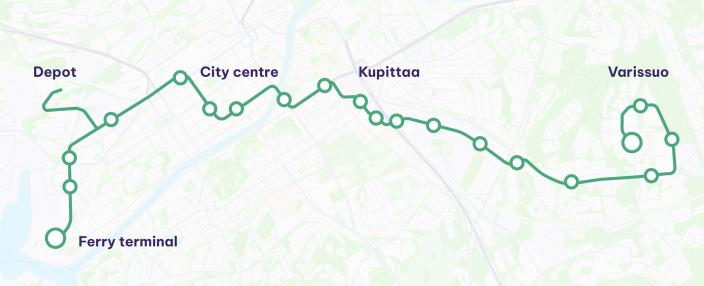
Currently, about a quarter of Turku residents live along the route from the Port through the city centre and Kupittaa to Varissuo. In the future, one in three residents and nearly one in two workers are expected to be located along the corridor.
What Would Turku’s Tramway Be Like?
The 12-kilometre route would include 20 stops near homes and services. Trams would run every 7.5 minutes from locations such as Market Square or Uudenmaankatu in front of Turku Cathedral.
– The tram would be an accessible, fast and comfortable way to travel both in and beyond the city centre. It would operate mainly in dedicated lanes, ensuring smooth traffic for everyone, Saarikoski says.
The tramway is designed to complement Turku’s public transport system. It would be part of Föli, allowing passengers to use the same ticket for both buses and trams.
A tram carries nearly three buses’ worth of passengers. To transport 2,000 passengers per hour past the Cathedral would require eight full trams, more than 20 buses or over 1,000 private cars.
The tramway would also intersect several main bus lines, allowing smooth transfers between the types of public transport.
Streets Would Be Renewed From Building to Building
All streets along the 12-kilometre route would be fully renewed. Municipal infrastructure would be comprehensively upgraded, and high-quality surface materials and green solutions would be introduced.
Around 40% of project costs are allocated to renewing the street environment.
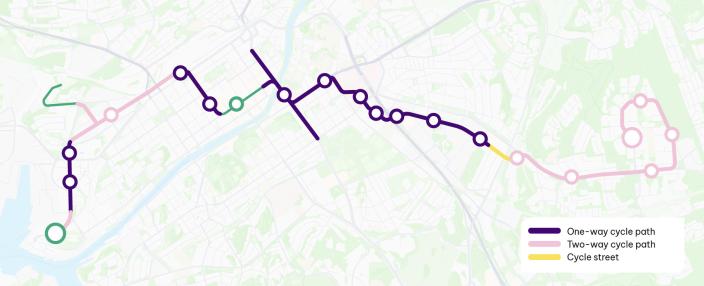
– The tram itself is only part of the project. We would also build new cycling lanes, sidewalks, green solutions and upgrade utilities. The urban environment would be comprehensively renewed, Saarikoski says.
Plans Published in January
All remaining plans and impact assessments were published in January.
The implementation plan describes how the Turku Tramway Alliance would deliver the tramway in Turku. The plan includes a binding cost estimate, a construction schedule, and details on how all streets along the 12-kilometre route would be renewed as part of the project.
The extensive impact assessments commissioned by the City outline how the tramway would affect, among other things, businesses, land use and municipal finances in the future Turku.
– Our goal is to build a tramway that suits Turku and serves its residents in the best possible way well into the future, says Saarikoski.
The tramway plans and impact assessments are open for public consultation until 2 March. The Turku Citizens’ Panel will convene on February 28 to discuss the tramway. In the Citizens’ Panel, a randomly selected group of residents from diverse backgrounds jointly deliberate on various questions and prepare recommendations to support decision-making.
The City Council of Turku will decide in summer 2026 whether or not the tramway will be built.
See the tramway's plans and impact assessments on the tramway's own website: turunraitiotie.fi
Answers to frequently asked questions about the tramway (in Finnish)
TEKSTI: TUOMAS ALIJOKI — TRANSLATION: CARL-IVAR BACK
The article has been published as a shorter version (in Finnish) in Turkuposti 1, 2026.
Turku Tramway in numbers
- 12 km
- 20 stops
- 14 trams
- 220–260 passengers per tram
- 7.5-minute interval
- 2026–2033 construction in two phases
- 2033 planned start of service in the autumn
Welcome to discuss the tramway
At drop-in events held around the city, residents will have the opportunity to discuss the tramway with the Mayor of Turku, Deputy Mayors, and experts from the City of Turku and the Turku Tramway Alliance.
Mayor Piia Elo and Deputy Mayors Mirka Muukkonen, Elina Rantanen and Sini Ruohonen will attend the events.
Turku Main Library Tuesday 3 March, 5–7 pm
Prisma Itäharju Monday 9 March, 5–7 pm
K-Citymarket Länsikeskus Thursday 12 March, 5–7 pm
Varissuo Shopping Centre Monday 16 March, 5–7 pm
The events are open to everyone and no advance registration is required. Welcome!